
Cremation urn materials explained
Cremation urns are made from a wide range of materials, each with a different look, weight, durability, and best use. This guide covers every material we offer, what makes each one distinct, and which situations it suits best.
Metal urns
Brass
A dense, traditional metal with a warm gold tone that can be left polished or given an antique finish. Brass urns are heavy, durable, and among the most common metal urns chosen for indoor display.
Aluminium
Lighter than brass while still durable, aluminium urns are often finished with detailed engraving or color accents. A practical choice when a lighter urn is preferred without moving to wood.
Wood urns
Solid wood
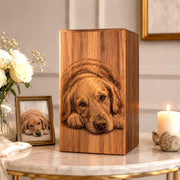
Natural grain, warm tones, and a lighter weight than metal or stone. We work with a wide range of species, from rosewood and teak to walnut, oak, and several others, each with its own color and grain character. See our full wood species guide for a breakdown of each.
Stone urns
Marble
A polished, elegant stone with natural veining that makes every piece slightly different. Marble urns are heavy and durable, well suited to a permanent indoor display or a mausoleum setting.
Granite
Denser and more weather-resistant than marble, granite holds up well outdoors, including at gravesites or in garden memorials. Available in darker, more uniform tones than marble's natural veining.
Glass and ceramic urns
Glass
Glass urns range from clear and minimal to richly colored, hand-blown designs. They're typically used for indoor display and are a popular choice when a more artistic, modern look is preferred.
Porcelain
A fine ceramic material often finished with painted detail or a glazed surface. Porcelain urns tend to have a softer, more traditional appearance and are usually intended for indoor display rather than outdoor or burial use.
Biodegradable urns
Biodegradable materials
Made from materials designed to break down naturally over time, such as compressed natural fibers, sand-based compounds, or certain untreated woods. These are built specifically for burial or water scattering, where a permanent material isn't appropriate or desired.
Aquamation urns Not a material
Aquamation, also called water cremation or alkaline hydrolysis, is a cremation method, not a material. It's a gentler alternative to flame cremation that uses water and an alkaline solution rather than fire. The remains it produces are typically lighter and finer than those from flame cremation, but any of the materials above — metal, wood, stone, glass, ceramic, or biodegradable — can be used to hold them. If you've chosen aquamation, your material decision works exactly the same way as it would for traditional cremation; just confirm capacity using the actual remains weight if it's known.
Not sure which material is right for you?
If you're weighing wood against metal specifically, our wood vs. metal comparison goes deeper on that decision, including individual wood species. For the bigger picture on choosing an urn overall, see our buying guide or our step-by-step checklist.
Find your urn size now →