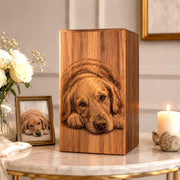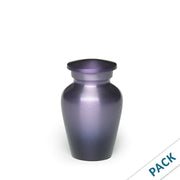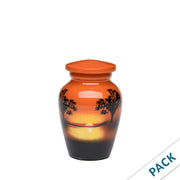

Wood vs. Metal urns: which is right for you?
Wood and metal are the two most common urn materials, and each has real advantages depending on how the urn will be used and displayed. This guide compares the two directly, then breaks down the most common wood species so you can choose based on grain, tone, and character — not just material type.
Wood vs. Metal at a glance
| Wood urns | Metal urns | |
|---|---|---|
| Appearance | Natural grain, warm tones, unique to each piece | Uniform finish, wide range of colors and styles |
| Weight | Generally lighter | Generally heavier, feels more substantial |
| Usable capacity | Removable lid reduces usable space by roughly 5% | Sealed cavity, full listed capacity is usable |
| Best for | Home display, natural or rustic aesthetics | Long-term durability, formal or modern aesthetics |
| Care | Avoid prolonged direct sunlight and high humidity | Minimal upkeep, occasional polishing depending on finish |
Neither material is objectively better — the right choice usually comes down to where the urn will be kept and what feels right for how you want to remember someone.
Wood species guide
Not all wood urns are the same wood. Grain pattern, color, and density vary significantly by species, which changes both the look and the feel of the finished urn. We now source all of the species below, so your choice can come down to grain and tone rather than availability.
Rosewood
Deep reddish-brown tone with a rich, pronounced grain. One of the most popular choices for a traditional, formal-looking urn. Dense and durable.
Teakwood
Warm golden-brown color that deepens with age. Naturally resistant to moisture and wear, making it a long-lasting choice for display.
Mango wood
Light to medium brown with distinctive, often dramatic grain variation, sometimes including darker streaks. Each piece looks genuinely unique.
Acacia
Ranges from golden tan to dark brown with bold, flowing grain lines. Dense and sturdy, with a slightly rustic character.
Indian elm
Light to medium brown with a smooth, even grain and a subtle natural luster. A durable, versatile wood with a slightly understated look compared to bolder grains like mango or acacia.
Walnut
Rich dark brown with a fine, straight grain. A classic choice for a refined, understated look.
Cedar
Light reddish-brown tone with a soft, straight grain and a distinctive natural aroma. A lighter-weight option with a casual, warm feel.
Maple
Pale, light tone with a subtle, fine grain. Suits a cleaner, more contemporary look compared to darker woods.
Red oak
Warm reddish tone with a strong, visible grain pattern. Sturdy and widely recognized, often used in traditional furniture as well as urns.
Silver fir
Pale, almost whitish tone with a fine, even grain. A softer wood with a light, understated appearance.
Spruce
Light cream to pale yellow color with a straight, tight grain. Lightweight with a clean, simple appearance.
Steam beech
Light pinkish-tan color, a result of the steaming process used to stabilize the wood. Smooth, even grain with a warm, soft appearance.
Pine
Light yellowish tone with visible knots and a casual, natural grain. An economical option with a simple, rustic character.
Which should you choose?
If you want something that feels warm, natural, and one-of-a-kind, wood is the better fit, with the species you choose shaping the exact tone and grain. If you want maximum durability, a sealed cavity with no usable-space reduction, or a more formal and uniform appearance, metal is the stronger choice.
Once you've settled on a material, the next step is confirming size. See our adult urn size guide or pet urn size guide, or use the calculator for an exact number.
Find your urn size now →