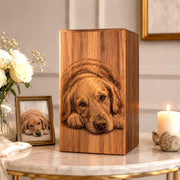

Why Are All Rosewood Urns Made in India — and Why Doesn't Canada Export Them?
If you've shopped for a rosewood cremation urn, you've probably noticed something: almost every listing traces back to India. Not Canada, not the US, not Europe. That's not a branding coincidence — it's the result of where the tree actually grows, plus one of the strictest international wildlife trade treaties in the world. Here's the full picture.
Rosewood Isn't One Tree — It's a Protected Genus
"Rosewood" is a common name for timber from the genus Dalbergia, which includes over 250 species worldwide — Brazilian rosewood, East Indian rosewood, Honduran rosewood, and many others. Since January 2017, every species in the entire Dalbergia genus has been listed under CITES Appendix II, the international treaty that regulates trade in species considered vulnerable to over-exploitation. Brazilian rosewood (Dalbergia nigra) carries even stricter Appendix I protection, which functions close to an outright commercial trade ban outside of pre-1992 stock.
In practice, that means any rosewood product crossing an international border — urns included — requires a valid CITES export permit from the country of origin, issued only after that country's scientific authority confirms the harvest doesn't threaten the species' survival.
Why India Specifically
1. The tree actually grows there
East Indian rosewood (Dalbergia latifolia), known locally as sheesham, is native to the Indian subcontinent. It's cultivated and harvested under managed forestry programs across several Indian states, which means India has a genuine domestic timber supply to work with — not an imported raw material that then needs re-exporting.
2. A permit and compliance system already exists
Because India is both a major source and exporter of Dalbergia species, it has built out the government infrastructure CITES requires: a Management Authority and Scientific Authority that issue export permits, set harvest quotas, and verify legal sourcing. Manufacturers exporting rosewood products from India work within a system that already exists for exactly this purpose — they're not the first shipment trying to figure out the paperwork.
3. Generations of hand-craftsmanship infrastructure
Rosewood is dense, hard, and difficult to work — it dulls tools quickly and requires real skill to carve, inlay, and finish without cracking. India's woodworking regions have generations of artisans trained specifically on hardwoods like sheesham and teak, which is why Indian-made rosewood urns commonly feature hand-cut brass inlay and detailed engraving that would be cost-prohibitive to replicate where that craft base doesn't exist.
Why Canada Doesn't Export Rosewood Urns
This comes down to two separate problems, not one.
- No domestic rosewood. Dalbergia species are tropical and subtropical hardwoods. Canada's climate doesn't grow them — there is no Canadian rosewood forestry industry to harvest from in the first place.
- Re-export adds a second compliance layer. A Canadian manufacturer wanting to use rosewood would first need to import raw or sawn rosewood under a CITES import permit from a source country, then apply for a CITES re-export certificate to ship a finished product onward internationally. That's two regulatory steps and two cost layers stacked on top of the base price of the wood, before any manufacturing even happens.
Canada's CITES Management Authority (under Environment and Climate Change Canada) does process rosewood-related permits — mostly for finished imports like musical instruments and furniture — but there's no economic case for building a rosewood urn manufacturing industry around imported, double-permitted raw material when countries with native supply already dominate the category.
All genuine rosewood (Dalbergia spp.) products in international trade require a valid CITES export permit from the country of origin. If you're sourcing rosewood urns wholesale, ask your supplier directly for their CITES export permit or re-export certificate per shipment — a legitimate Indian exporter will have this as a standard part of their documentation alongside IEC (Import Export Code) and GST registration. Products without this paperwork risk seizure at customs in CITES member countries, including the US, Canada, and the EU.
India vs Other Potential Source Countries
| Country | Native Rosewood? | CITES Export Infrastructure | Craft Manufacturing Base |
|---|---|---|---|
| India | Yes (Dalbergia latifolia) | Established Management/Scientific Authority, active export permits | Generations of hardwood artisans |
| Canada | No | Import + re-export permits required, no domestic harvest authority | Minimal hardwood inlay craft tradition |
| China | No native supply; large importer (hongmu furniture tradition) | Import-dependent, subject to same CITES rules as any importer | Strong, but typically applied to imported rosewood at high volume |
| Brazil | Yes (Dalbergia nigra), but Appendix I | Effectively closed to new commercial trade | Limited modern export industry for this species |
What This Means If You're Buying or Sourcing
- A genuinely solid rosewood urn is very likely to be of Indian origin — that's not a marketing claim, it's a function of where the tree grows and where the permit infrastructure exists.
- Always ask for CITES export documentation if you're buying wholesale or in bulk — it protects you from a shipment being held or seized at customs.
- Be cautious of "rosewood" urns priced far below market — true Dalbergia timber carries real material and compliance cost; suspiciously cheap "rosewood" is often a stained substitute wood.
Sourcing Genuine Rosewood Urns?
SOULURNS urns are manufactured by Qualcosa International in New Delhi using authentic sheesham (Indian rosewood), with CITES export documentation provided on wholesale orders.
View Wholesale & B2B Pricing